Your Sea Point, Cape Town Travel Guide 

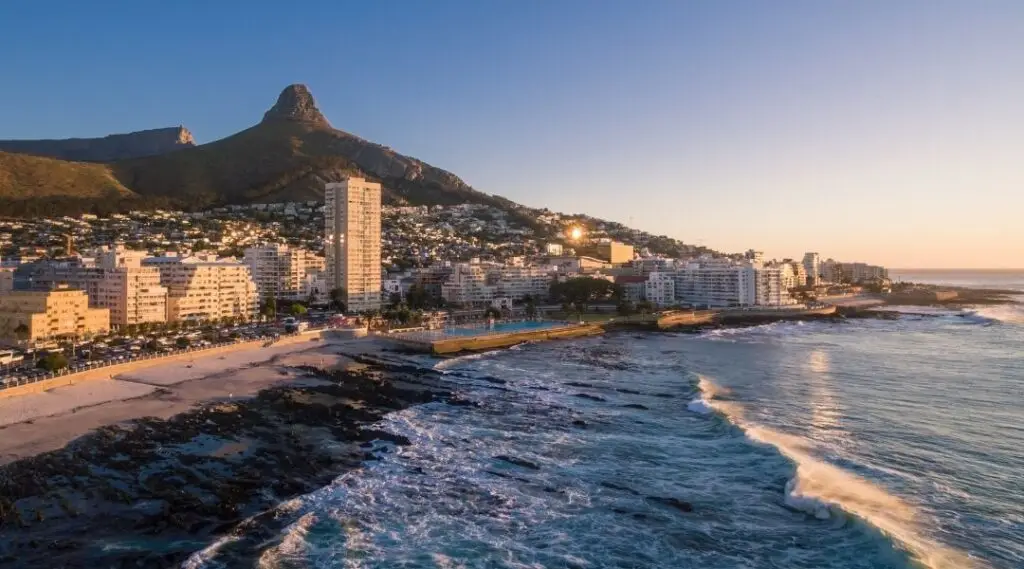
Cape Town is packed with neighbourhoods with distinct vibes, and Sea Point is no exception. Wedged between the slopes of Signal Hill and the Atlantic Ocean, Sea Point is a great place to base yourself if you want to experience the city beyond the usual tourist routes.

Known for its long, lively promenade, rocky coastline and small beach pockets, this suburb combines relaxed coastal living and urban energy. 

This trendy coastal neighbourhood offers more than fabulous scenery. High-rise apartments line the oceanfront, while Main and Regent Roads are home to abundant cafés, restaurants, and shops that give the area its unmistakable buzz. 

From early risers out for a jog along Beach Road to groups unwinding with sundowners, and night owls grabbing a bite after an evening out—Sea Point keeps its rhythm from sunrise to well past sunset.

Here’s what you need to know to get the most out of your visit to Sea Point Cape Town.

What makes Sea Point Cape Town special?

Sea Point Cape Town has earned its place on the global radar as one of the world’s coolest suburbs — not just for its postcard-worthy setting, but for the experience it offers. This is one of the most cosmopolitan corners of The Mother City, where cultures, histories, and lifestyles intersect with ease.

It’s also well positioned for easy access to the city centre, the V&A Waterfront, and some of the Cape’s most iconic sights. With a mix of casual eateries, scenic walking paths, and a strong sense of local community, Sea Point is lively, layered, and always interesting. 

When’s the Best Time to Visit Sea Point Cape Town?

Sea Point is a year-round destination, but the experience shifts with the seasons.

Summer (December to February) is peak Cape Town. The days are long, warm, and sunny—perfect for beach outings, early morning walks along the Promenade, or relaxed evenings at a rooftop bar. The neighbourhood is at its most lively, especially around the holidays.

Autumn (March to May) can be a sweet spot if you prefer things quieter. The weather is still pleasant, the pace slows down, and it’s a great time to explore without the summer crowds.

Winter (June to August) brings cooler days and more rain, but Sea Point still ticks along. The restaurants and cafés stay busy, and it’s a good time to enjoy the indoor side of Cape Town.

Spring (September to November) brings milder weather and a bit of everything—green spaces start to bloom, the beaches begin to fill up again, and the city starts warming up for summer.

Spring, from September to November, brings milder weather and a bit of everything—green spaces start to bloom, the beaches begin to fill up again, and the city starts warming up for summer.

Things to do in Sea Point Cape Town

Sea Point Cape Town offers a steady rhythm of things to do—from oceanfront walks and outdoor workouts to local cafés, weekend markets, and people-watching along the promenade.

things to do in seapoint cape town

The Promenade

The Sea Point Promenade—colloquially known as “The Prom”—is the heart of it all. Stretching almost 7 km along the coast from Mouille Point to Bantry Bay, it’s flat, well-maintained, and busy from sunrise to sunset with walkers, runners, dog owners, and families. Benches along the way give you a chance to pause for a morning coffee or catch the sunset over the Atlantic. There’s also a free beachfront outdoor gym and a dedicated cycle path.

Sea Point Pavilion & Tidal Pools

The Sea Point Pavilion has a large Olympic-sized pool, smaller family-friendly pools, and changing facilities—all right at the ocean’s edge, and open to the public for a few rand. Nearby, Saunders Rock Tidal Pool at the Clifton end of the promenade is a popular spot for cold-water dips and sunset watching.

Kayaking, Paragliding & Cycling

If you’re after something more active, kayaks are available for hire to paddle along the shoreline—keep an eye out for dolphins. Paragliders launch from Signal Hill and drift down over the suburb. Bikes and e-bikes are available for hire from Up Cycles, making it easy to cover more of the Atlantic Seaboard at your own pace.

Mojo Market

One of the more popular gathering spots in Sea Point, Mojo Market on Regent Road has a rotating lineup of food stalls—sushi, burgers, poké, falafel—plus bars, live music, and a casual communal vibe. Free salsa evenings on Saturdays. Open 365 days a year with free entrance.

Inside Kleinsky's Deli in Seap Point Cape Town

The Food and Drink Scene

Sea Point has one of the most varied and accessible food scenes in Cape Town. The main roads are lined with long-standing neighbourhood cafés and newer spots serving global cuisine.

All-day breakfast cafés are a staple here. Kleinsky’s is a beloved spot for bagels and strong coffee. Jarryds draws a loyal brunch crowd, while Naked and Coco Safar are popular with the morning regulars. For remote workers, Mischu and Bootlegger are favourite spots.

Traditional Jewish delis still play an important role in the area, reflecting Sea Point’s long-established cultural mix. You’ll also find eateries serving Middle Eastern street food, sushi, and plant-based dishes—many small, independently owned, and catering to locals and visitors alike.

For evenings, restaurants like The Nines and NV-80 offer a more classic sit-down experience. Rooftop bars and cocktail lounges bring in the evening crowd, while takeaway spots keep the energy going well into the night.

Our team at Blackheath Lodge knows this food scene well. If you want a recommendation that suits your taste and pace, just ask—we’ll point you in the right direction or book it for you.

Shopping 

Shopping in Sea Point is a mix of practical and boutique. Main and Regent Roads offer various retail options, from fashion and speciality stores to everyday conveniences like supermarkets and pharmacies.

If you’re looking beyond the basics, there are small independent stores selling home goods, local fashion, skincare products, and curated gifts. A number of these shops focus on locally made or ethically sourced items.

Sea Point is also home to several lifestyle and wellness stores, from organic markets to health and beauty retailers. Pop-up stalls and weekend markets occasionally appear, adding more variety with handmade goods, vintage clothing, and art.

While Sea Point isn’t a high-end shopping district, its variety, accessibility, and strong presence of locally owned businesses make it easy and enjoyable to explore on foot.

Sea Point for Families

Sea Point is a practical and welcoming holiday base for families. The long promenade is a favourite for kids on bikes or scooters. Nearby Green Point Urban Park offers open, landscaped space with play areas, walking trails, and shaded spots for picnics.

Just beyond Sea Point, big-ticket attractions include the Cape Wheel at the V&A Waterfront, the Table Mountain Aerial Cableway, and the Two Oceans Aquarium—a firm favourite with younger visitors. Art Jamming studios offer a creative option, and the Play by Nature Art Club runs regular workshops combining art, nature, and hands-on learning.

Many cafés and casual restaurants are family-oriented, with outdoor seating and a relaxed atmosphere that works well for groups with younger children.

Safety in Sea Point

Sea Point is considered one of Cape Town’s safer neighbourhoods and is generally comfortable for visitors throughout the day. The Promenade and main corridors are busy from early morning into the evening, with frequent security presence along the beachfront and on Regent Road.
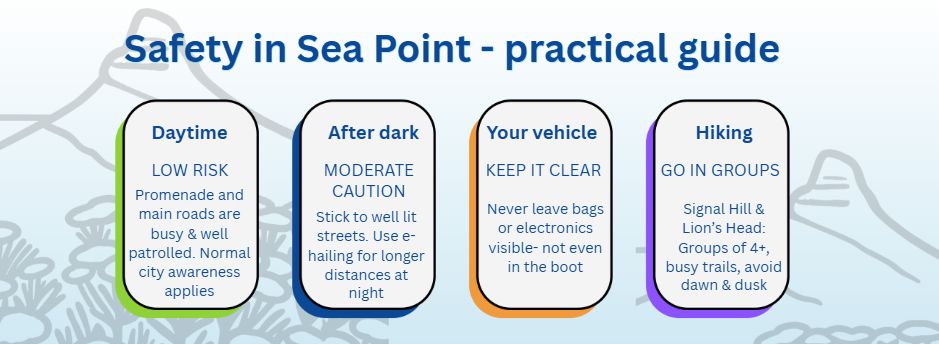
infographic, safety tips for staying in Sea Point

Like any urban area, standard precautions apply: keep valuables secure, avoid quiet side streets after dark, and use Uber or Bolt rather than walking long distances at night. Car break-ins can happen if belongings are left visible—don’t leave anything in your vehicle. If you’re planning to hike Signal Hill or Lion’s Head, go in groups of four or more and stick to well-used trails.

Overall, common sense goes a long way, and most visits pass without incident.

How to Get There & Around

Sea Point is on the northwestern edge of Cape Town, between Green Point and Bantry Bay, with the Atlantic Ocean stretching out beside it. It’s well positioned to reach the city centre, the V&A Waterfront, and nearby coastal neighbourhoods.

If you’re flying into Cape Town International Airport, Sea Point is about a 30–40 minute drive, depending on traffic. Ride-hailing services are available at the airport. Taxis are also an option, though they tend to be more expensive.

Guests staying with The Oyster Collection can arrange private airport transfers—a simple option if you’d prefer to skip the drive and unwind after your flight.

an infographic of Sea Points position

Once you’ve arrived, getting around is easy. Sea Point is very walkable, especially along the popular promenade. The area is compact, and many cafés, shops, and local attractions are within walking distance. 

Staying at Blackheath Lodge makes it easy to explore beyond Sea Point. With The Oyster Collection’s bespoke tours, you can take in some of the Western Cape’s most spectacular highlights. Spend a full day winding your way around the Cape Peninsula or head into the Cape Winelands to visit a handpicked selection of beautiful wine estates. 

We also offer half-day city tours, perfect for visiting key museums, learning about South Africa’s history, and riding the cable car up Table Mountain for sweeping views of the city and coastline.

Blackheath Lodge and Villas

Where to Stay in Sea Point

Sea Point offers a range of accommodation options, from beachfront hotels and self-catering apartments to boutique guesthouses.

If you’re looking for something more personal, Blackheath Lodge is part of The Oyster Collection and sits at the base of Signal Hill—close enough to the city and the Waterfront, but private enough to feel like a proper retreat.

Our rooms are individually styled with thoughtful touches throughout. There’s a heated saltwater pool and a peaceful garden. For families or small groups who want a little more space, Villa Gareloch and Villa Lauren are self-catering villas right next door to the lodge, each with a kitchen, living area, and outdoor space. You’ll still have access to breakfast at the lodge, and our concierge team is on hand to help plan your days or book experiences.

We also offer bespoke tours for guests who want to explore beyond Sea Point—full-day Cape Peninsula drives, Cape Winelands visits, and half-day city tours that include Table Mountain.

If you’d like help planning your stay or getting the most from your time in Cape Town, reach out to our team and we’ll take care of the details.

view of Signal Hill from the Sea Point Promenade
Aerial view of Sea Point In Cape Town
Atlantic Seaboard coastline at Sea Point

Frequently asked questions about Sea Point


Q: Is Sea Point a good base for exploring Cape Town?

Yes — Sea Point is one of the most practical places to stay in Cape Town. It sits between the city centre and the Atlantic Seaboard, which means the V&A Waterfront, Table Mountain, and the Cape Peninsula are all within easy reach. The area is very walkable, the MyCiTi bus connects you to key parts of the city, and Uber is fast and reliable. Staying somewhere like Blackheath Lodge puts you right at the base of Signal Hill, close enough to the buzz without being in the middle of it.

Q: Is Sea Point safe for tourists?

Sea Point is considered one of Cape Town’s safer neighbourhoods and is comfortable for visitors throughout the day. The Promenade and main streets are busy and well-patrolled from early morning into the evening. Standard precautions apply after dark — stick to well-lit streets, use Uber or Bolt rather than walking long distances, and don’t leave valuables visible in your car. If you’re planning to hike Signal Hill or Lion’s Head, go in a group of four or more and keep to well-used trails.

Q: What is the best time of year to visit Sea Point?

Sea Point works year-round, but the experience shifts with the seasons. Summer (December to February) is peak season — long sunny days, a lively promenade, and the neighbourhood at its most energetic. Autumn (March to May) is a good alternative if you prefer a quieter pace with still-pleasant weather. Winter brings cooler days and some rain, but the cafés and restaurants stay busy and it’s a great time to enjoy the indoor side of Cape Town. Spring (September to November) is an underrated window — mild weather, fewer crowds, and the city warming up again.

Q: What are the best things to do in Sea Point?

The Sea Point Promenade is the obvious starting point — almost 7 km along the coast, with a free outdoor gym, a cycle path, and plenty of spots to sit and watch the Atlantic. The Sea Point Pavilion has Olympic-sized seawater pools right at the ocean’s edge. Mojo Market on Regent Road is worth an evening for food stalls, live music, and a relaxed crowd. For something more active, kayaks and bikes are available for hire, and paragliders launch from Signal Hill. The café strip along Regent Road — Jarryds, Kleinsky’s, Mischu — is as good a reason as any to slow down.

Q: How far is Sea Point from Cape Town airport?

Sea Point is around 30 to 40 minutes from Cape Town International Airport, depending on traffic. Ride-hailing services are available at the airport and are the most straightforward option. Taxis are also available, though they tend to cost more. Guests staying with The Oyster Collection at Blackheath Lodge can arrange a private airport transfer — a good option if you’d rather arrive without the logistics.

Q: Where should I stay in Sea Point, Cape Town?

Sea Point has plenty of options — hotels, self-catering apartments, and guesthouses — but for something more personal, Blackheath Lodge is a strong choice. Part of The Oyster Collection, it sits at the base of Signal Hill with individually styled rooms, a heated saltwater pool, and a peaceful garden. The concierge team knows Cape Town well and can handle everything from restaurant bookings to airport transfers and day trips. For families or groups wanting more space, Villa Gareloch and Villa Lauren are self-catering villas right next door with access to the lodge’s breakfast and team.

Written by The Write Dynamic for The Oyster Collection, combining SEO-informed content strategy with insight and information provided by The Oyster Collection team.