

Chapman’s Peak Drive: One of Cape Town’s Most Scenic Experiences
There are certain experiences almost every visitor adds to their Cape Town itinerary. A trip up Table Mountain. A sunset along the Atlantic Seaboard. A day exploring the Cape Peninsula.
Driving Chapman’s Peak belongs firmly on that list.
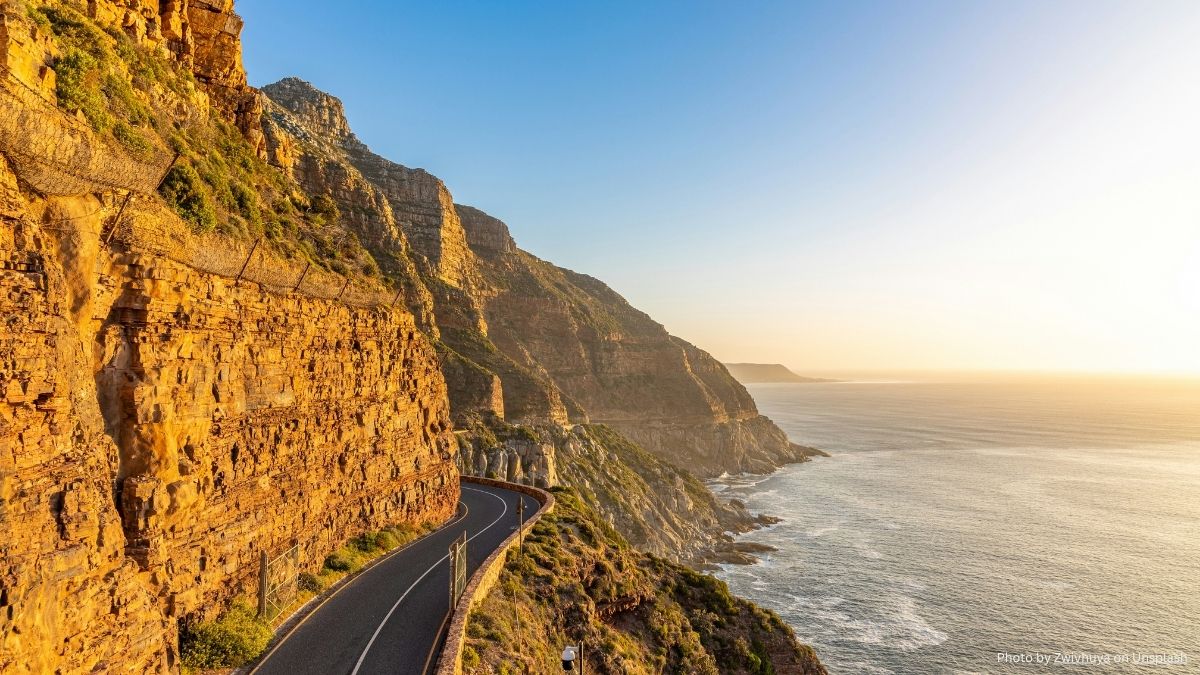
Known locally as Chappies, this famous coastal road links Hout Bay and Noordhoek along the Atlantic side of the Cape Peninsula. The route is only about 9km long, but it packs in more than 100 curves, steep mountain slopes, sheer drops, ocean viewpoints, and some of the most photographed scenery in South Africa.
For many travellers, Chapman’s Peak is part of a bigger Cape Peninsula day trip. It is often driven to Cape Point, Noordhoek, Kommetjie, or the southern peninsula. But the drive is not just a way to get somewhere else. It is one of the highlights of the journey.
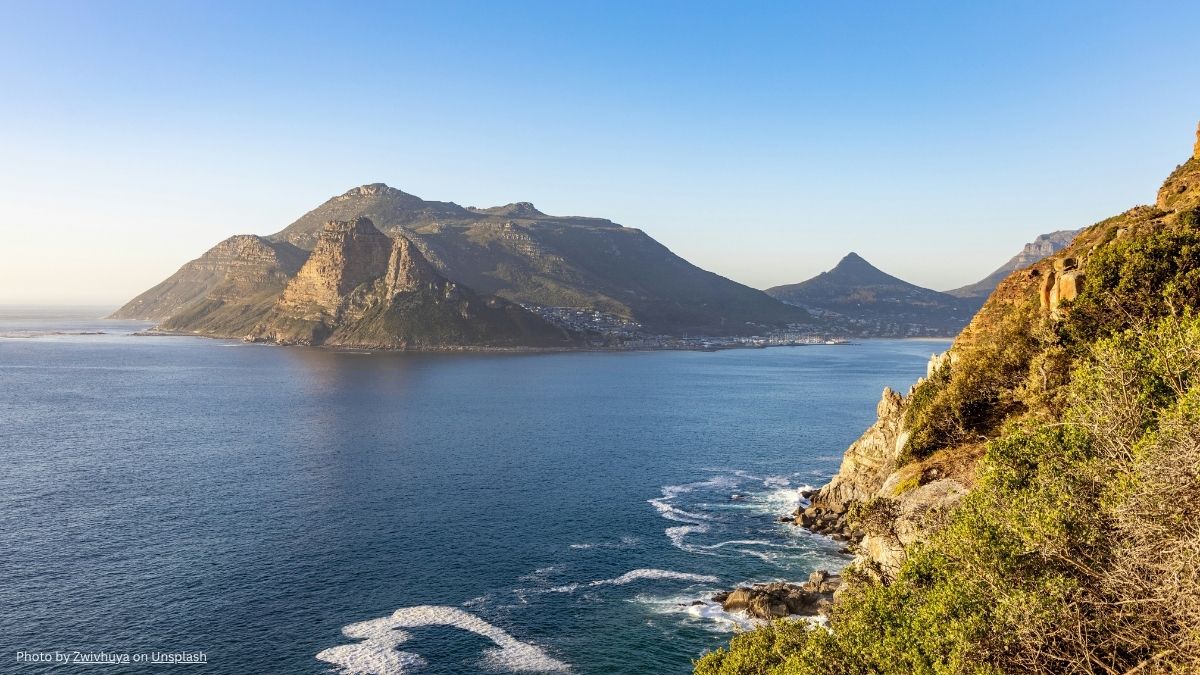
Why Chapman’s Peak Drive Is So Famous
Chapman’s Peak Drive is widely regarded as one of the world’s most scenic marine drives. The road follows the mountainside between Hout Bay and Noordhoek, with the Atlantic Ocean on one side and steep cliff faces rising on the other.
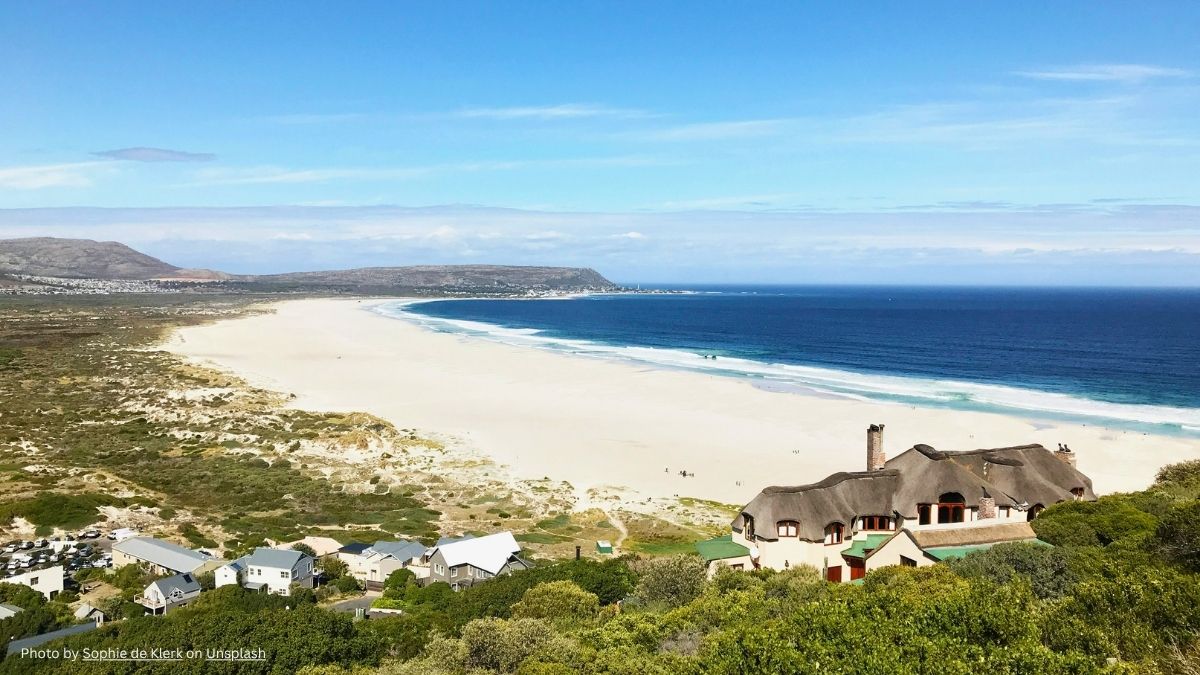
The scenery is the obvious reason people come here. Every bend gives you a different view. Looking back toward Hout Bay, you see the bay, harbour, beach, and surrounding mountains. Further along the pass, the views open toward Noordhoek Beach, with its long stretch of white sand and open coastline.
But Chapman’s Peak is not only scenic. It is also an impressive piece of engineering.
The road was carved into the near-vertical face of the mountain and first opened in 1922. Building a road in this position, between mountain and sea, was a major achievement for its time. In the early 2000s, the route underwent major re-engineering to improve safety and protect motorists from rockfalls while preserving the character of the drive.
That combination of natural drama and engineering history is part of what makes Chappies so memorable.
Driving Chapman’s Peak From Cape Town
If you are driving Chapman’s Peak from central Cape Town, Camps Bay, Sea Point, or the Atlantic Seaboard, you will usually approach it through Hout Bay.
The route takes you through the town before you reach the toll road and the start of the mountain pass. In peak season, Hout Bay can be very busy. Expect local traffic, visitors heading to the beach, tour buses, cyclists, motorbikes, and day-trippers all moving through town.
This is not a quiet hidden village. Hout Bay is an active coastal town with a working harbour, a busy main road, established neighbourhoods, shops, restaurants, schools, local businesses, and a strong tourism economy.
For visitors, that makes it a useful and interesting place to stop before driving Chapman’s Peak. You can have lunch, buy seafood, grab coffee, browse local shops, visit the harbour, or take a short walk before continuing toward Noordhoek.

The Republic of Hout Bay
As you drive through Hout Bay, you may notice references to the “Republic of Hout Bay.”
This local story dates back to the mid-1980s, when South Africa was facing international boycotts, and tourism was under pressure. Hout Bay, despite being close to Cape Town and surrounded by natural attractions, needed a way to draw visitors back into the area.
The idea came from Stanley Dorman, founder of Mariner’s Wharf. While travelling overseas, he reportedly came up with the idea that Hout Bay should jokingly declare itself an independent republic and issue its own passport.
Working with local tourism bodies, the town council, Rotary, Lions Club members, and community volunteers, the idea took off. Informal “border checkpoints” were set up on roads into Hout Bay over weekends and public holidays, where motorists were encouraged to buy novelty passports. Proceeds went to local charities and service organisations.
It was a clever campaign, and it worked. The Republic of Hout Bay became part of the town’s identity and helped keep Hout Bay in the public eye during a difficult tourism period.
The passport is still available today and includes discounts at selected local businesses.
Explore Fisherman’s World at Mainstream Mall
Another worthwhile Hout Bay stop is Fisherman’s World at Mainstream Mall, just off Main Road.
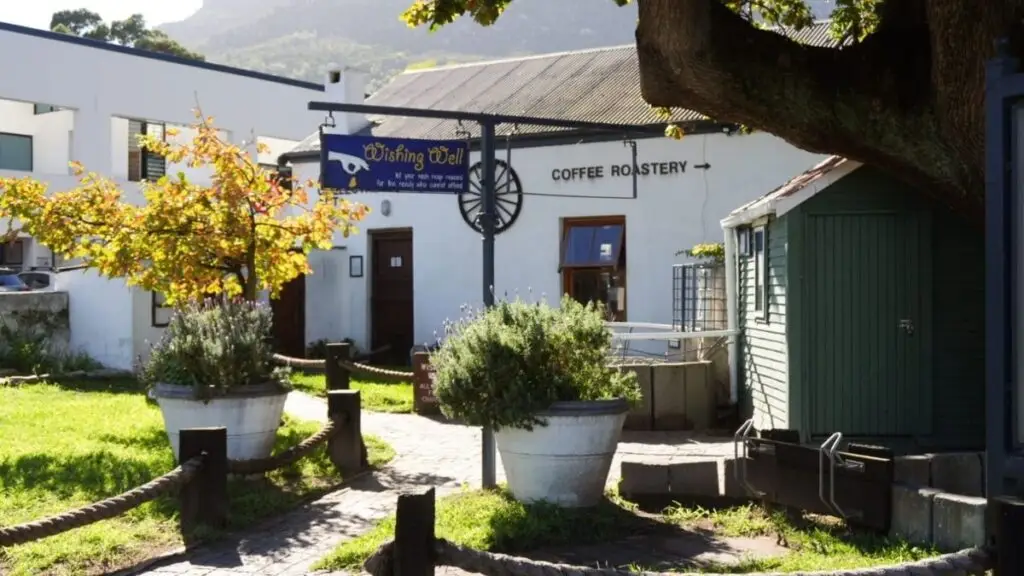
This part of the centre is built around restored Victorian-era buildings from Hout Bay’s earlier village years. Historic structures in the precinct include buildings once used as the old General Dealer and the Telephone Exchange.
It does not feel like a conventional shopping centre. The area is made up of smaller heritage-style buildings, garden spaces, brick walkways, courtyards, and pedestrian lanes beneath large established trees. Today, the buildings house independent cafés, antique spaces, gift shops, galleries, studios, and small local businesses.
Because it sits directly on the route toward Chapman’s Peak Drive, Fisherman’s World is an easy place to stop for coffee, browse, or stretch your legs before continuing along the peninsula.
It also gives visitors a glimpse of an older part of Hout Bay that is easy to miss if you only drive straight through town.
Mariner’s Wharf: Africa’s First Harbourfront Emporium
One of Hout Bay’s best-known landmarks is Mariner’s Wharf, located beside the working harbour.
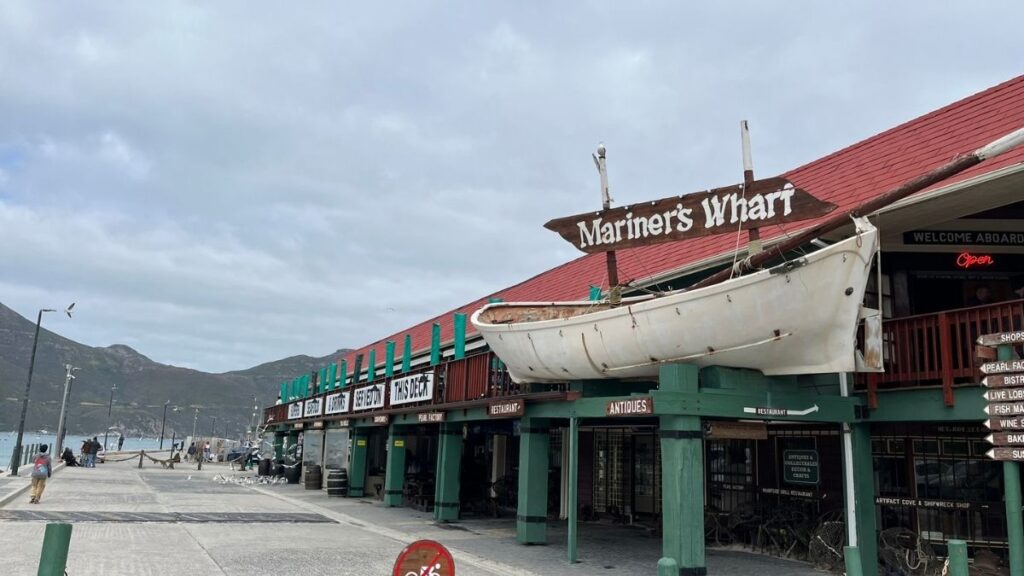
Opened in 1984, Mariner’s Wharf became known as Africa’s first harbourfront emporium. It remains one of the most recognisable stops on the Cape Peninsula route, especially for travellers driving between Cape Town, Hout Bay, Chapman’s Peak, and Cape Point.
The building is easy to spot. Large maritime signs stretch across the harbour-facing deck, and an old dinghy mounted above the entrance has become one of its most recognisable features. The red roof, timber details, green posts, harbour setting, and direct connection to the sea make it feel very different from a modern shopping or restaurant development.
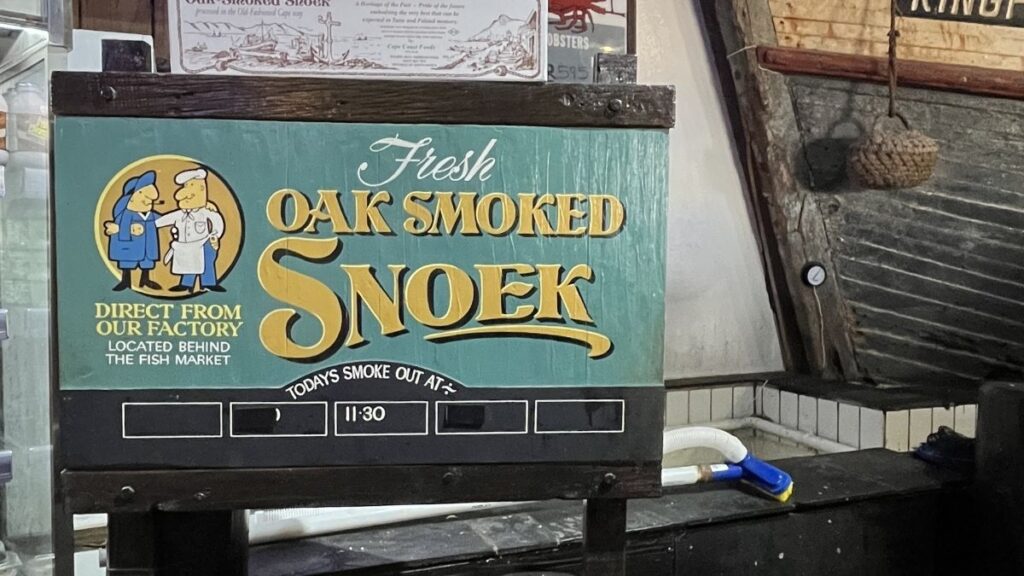
Mariner’s Wharf brings together a seafood restaurant and bistro, a fish market, smokeries, maritime antiques, and curio shops. In the restaurant, authentic maritime memorabilia collected over many years adds to its strong harbour character.The Wharfside Grill is especially popular with visitors looking for a fresh seafood meal before or after driving Chapman’s Peak.
What makes Mariner’s Wharf interesting is that it is not trying to imitate harbour culture. It is part of Hout Bay’s harbour story. The building stands beside a working fishing harbour, and its maritime details are tied to the area’s long relationship with the sea.
For many visitors, this is the natural place to stop before heading over Chapman’s Peak. Have lunch, look around, take in the harbour, and then continue toward the toll road.
What to Expect on Chapman’s Peak Drive
Once you leave Hout Bay and begin the climb onto Chapman’s Peak Drive, the scenery changes quickly.
The road rises along the mountainside, with Hout Bay behind you and the Atlantic Ocean below. The curves are part of the experience, so this is not a route to rush. Drive slowly, use the designated viewpoints, and give yourself time to stop safely.
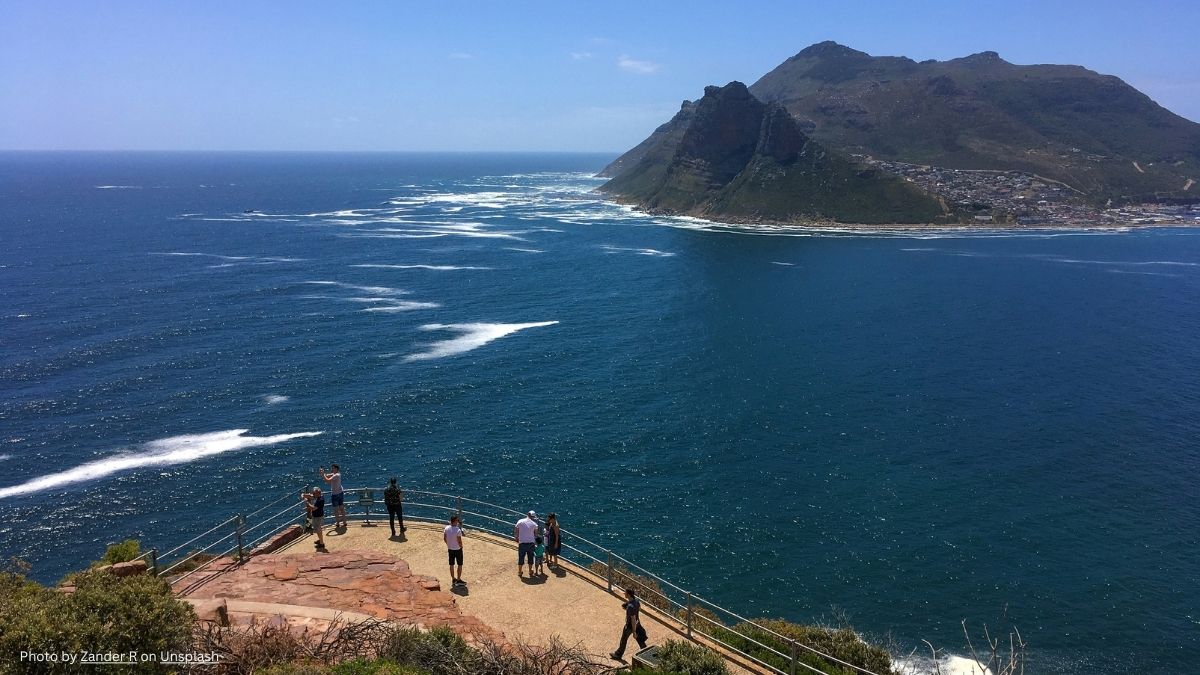
There are several places along the route where you can pull over and take photographs. Some viewpoints look back toward Hout Bay and the harbour, while others open toward the cliffs, ocean, and Noordhoek coastline.
The road is a toll route, so check the current toll fee before you go. It is also worth checking the road status online, especially during bad weather, strong winds, fire risk, or after heavy rain, as closures can happen for safety reasons.
Things to Do on Chapman’s Peak
Most people drive Chapman’s Peak, but the route is also popular with outdoor travellers.
Cyclists and runners use the road regularly, especially early in the morning before traffic becomes heavier. Chapman’s Peak is also a famous section of both the Cape Town Cycle Tour and the Two Oceans Marathon, which has added to its reputation as one of the city’s great outdoor routes.
There is also a Chapman’s Peak hiking trail, which offers elevated views across Hout Bay, Noordhoek, and the Atlantic coastline. It is a moderately challenging hike and usually takes several hours, so it is better suited to visitors with a reasonable level of fitness and enough time in their itinerary.
Photographers will find plenty to work with along the drive. The switchbacks, cliffs, ocean views, changing light, and weather conditions make the route especially striking in the early morning or late afternoon.
Some visitors also explore the area from above through tandem paragliding experiences offered nearby.
Whale Watching and Wildlife
Chapman’s Peak’s elevated viewpoints make it a good land-based whale watching route during the winter and spring months.
Southern Right Whales are most often seen along the Cape coastline from around July to November. From the higher viewpoints, visitors may also spot dolphins or seals in the water below.
As always with wildlife, sightings are never guaranteed. But during whale season, it is worth taking your time at the pull-over points and scanning the water before moving on.
Continue Toward Noordhoek
After Chapman’s Peak, the road descends toward Noordhoek.
Noordhoek is known for its long beach, open views, horse riding, cafés, and more rural atmosphere compared with the busier Atlantic Seaboard. Many visitors continue from here toward Kommetjie, Cape Point, or Simon’s Town as part of a full Cape Peninsula route.
Cape Point Vineyards is also a popular stop on the Noordhoek side, especially for wine tasting, picnics, and views across the valley and coastline.
This is why Chapman’s Peak works so well as part of a day trip. In a relatively short stretch, you move from busy Hout Bay through a dramatic mountain pass and down into a completely different coastal landscape.
Practical Tips for Driving Chapman’s Peak
Chapman’s Peak is easy to enjoy, but a little planning helps.
- Check whether the road is open before you leave, especially in winter or during poor weather. The route can close when conditions make it unsafe.
- Carry a card or cash for the toll, depending on current payment options.
- Drive slowly and use only the official stopping areas. The views are distracting, but the road is narrow in places and shared with cyclists, runners, motorbikes, tour vehicles, and other drivers.
- Go early if you want quieter roads and better space at the viewpoints.
- Allow extra time if you plan to stop in Hout Bay, visit Mariner’s Wharf, explore Fisherman’s World, or continue toward Noordhoek and Cape Point.
Plan Chapman’s Peak as a Cape Town Day Trip
Chapman’s Peak Drive is an easy addition to a Cape Town itinerary, especially for visitors staying along the Atlantic Seaboard.
Guests staying at The Oyster Collection’s Cape Town properties can plan the route as part of a relaxed day out, travelling from the city through Hout Bay, stopping at Mariner’s Wharf or Fisherman’s World, and continuing over Chapman’s Peak toward Noordhoek, Cape Point, or the southern peninsula.
From Blackheath Lodge in Seapoint, the route into Hout Bay follows one of Cape Town’s most scenic coastal approaches. From POD Camps Bay, guests are already close to the Atlantic coastline, making Chapman’s Peak a natural next stop on a day of beaches, mountain views, seafood, and Cape Peninsula exploring.
Whether you drive the route independently or arrange a guided day trip, Chapman’s Peak is one of the clearest reasons to give yourself more than one or two nights in Cape Town.
The All Blacks tour South Africa in August 2026, their first full tour here in more than 30 years, and Cape Town hosts two of the fixtures. The Stormers play New Zealand on Friday 7 August, and the Springboks meet the All Blacks in the second Test on Saturday 29 August. Both are at DHL Stadium (Cape Town Stadium) in Green Point.
Tickets sold back in January and February, so if you have your seat, the open question now is where to stay. Finding the right All Blacks Cape Town accommodation comes down to more than proximity to the stadium, especially with three weeks between the two fixtures — and it matters whether you are flying in from New Zealand or making your way down from elsewhere in South Africa.
At The Oyster Collection, we host guests across Cape Town year-round, and choosing where to stay always starts with the same question: how do you want your days to work? For a rugby weekend, it usually comes down to a few things: whether you want to walk home from the stadium or drive back to the beach, a lively spot near the restaurants or a quiet residential street, a room of your own or a villa for the whole travelling group. Here is how the options compare.
Is Chapman’s Peak Drive Worth It?
Yes. Chapman’s Peak Drive is one of Cape Town’s most worthwhile scenic experiences.
The road is short, but the impact is lasting. It combines mountain engineering, Atlantic coastline, major viewpoints, outdoor activity, local history, and easy stops in Hout Bay and Noordhoek.
For travellers visiting Cape Town, it is more than a beautiful road. It is one of the clearest ways to experience the shape and scale of the Cape Peninsula, from the busy streets of Hout Bay to the cliffside curves above the ocean and the long coastline beyond Noordhoek.
Plan it properly, give yourself time to stop, and let the drive be part of the day rather than just the route between two places.
Planning a Cape Town stay? Explore The Oyster Collection’s Cape Town properties, including Blackheath Lodge in Seapoint and POD Camps Bay, both well positioned for scenic day trips along the Atlantic Seaboard, Hout Bay, Chapman’s Peak and the wider Cape Peninsula.
Frequently Asked Questions About Chapman’s Peak Drive
Is Chapman’s Peak Drive worth visiting?
Yes. Chapman’s Peak Drive is one of Cape Town’s most scenic coastal routes, running between Hout Bay and Noordhoek along the Atlantic coastline. The official Chapman’s Peak Drive website describes it as one of the most spectacular marine drives in the world, with a 9km route and 114 curves around the mountain.
Is Chapman’s Peak Drive a toll road?
Yes. Chapman’s Peak Drive is operated as a toll road, and the tariff depends on the vehicle category. The official website recommends checking the latest standard tariffs before travelling, as toll fees are subject to annual increases.
Can you visit Chapman’s Peak Drive for free?
Visitors entering from the Hout Bay side can request a Chapman’s Peak Day Pass, also called a Picnic Voucher. This gives access to the first section of the drive, including designated picnic areas, viewing spots and mountain trails before the Day Pass Control Point. The Day Pass has set seasonal hours and must be returned when exiting on the Hout Bay side.
What can you do on Chapman’s Peak Drive?
Chapman’s Peak Drive is popular for scenic driving, sightseeing, cycling, running, hiking, photography and picnicking. The official website also notes that the route has numerous pull-over areas, three major picnic areas and more than 60 picnic tables and benches along the drive.
Does Chapman’s Peak Drive ever close?
Yes. Chapman’s Peak Drive may close for safety reasons, especially during high winds, heavy rain, continuous rain, maintenance work or when rocks need to be cleared from the catch fences. It is best to check the official road status before travelling.
Written by The Write Dynamic for The Oyster Collection, combining SEO-informed content strategy with insight and information provided by the Oyster Collection team.