

Franschhoek in Winter: Why the Cape Winelands Are Worth Visiting in the Cooler Months
Franschhoek is a small village in the Cape Winelands, about an hour’s drive from Cape Town. It sits in a valley ringed by mountains, with wine estates running along both sides of the road and a village centre compact enough to cover on foot.
Most visitors arrive in summer and have good reason to. However, winter, from June through August, offers a quieter, more intimate version of Franschhoek that is often more rewarding.
This guide covers what to do, where to eat, and where to stay if you’re planning to visit Franschhoek in winter.
What the Weather Is Like in Franschhoek in Winter
Franschhoek is in a winter rainfall region, so June through August brings most of the year’s precipitation. Daytime temperatures in June and July average between 8°C and 16°C. August is the coldest month overnight, with lows around 7°C. June is the wettest month, with around 100mm of rain over 13 days.
In practice, this means cold fronts moving through the valley — strong north-westerly winds and heavy downpours, followed by scattered showers and icy south-westerly winds. Snow falls occasionally on the surrounding mountain peaks. Between the wet spells are clear, sunny days with crisp blue skies and cold mornings. Nights are cold throughout the season.
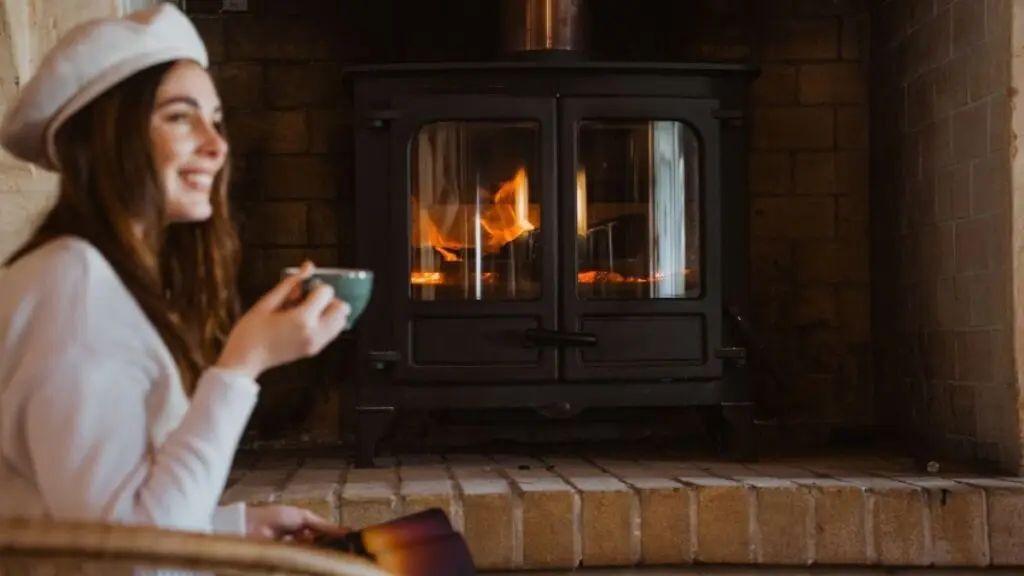
Most of what makes Franschhoek worth visiting — wine estates, restaurants, galleries, and the village centre — operates comfortably in winter conditions. Pack layers, a waterproof jacket, and shoes that can withstand wet, cobblestone surfaces. A fireplace and a good red at the end of the day are easy to find.
It is also worth knowing that autumn — April and May — is widely considered the most beautiful season in the valley. The vines turn rust and gold, the first rains bring the fynbos back to life, and the evenings are calm enough for outdoor dining. If your travel window is flexible, early May sits at the edge of the winter special period and catches the tail end of that colour.
Why Winter Is a Good Time to Visit Franschhoek
The practical case for visiting in the cooler months starts with access. Summer brings crowds to the popular estates, queues at restaurants, and intense competition for bookings, making spontaneous plans difficult. In winter, that pressure eases.
Wine tastings become more intimate. Restaurants are easier to book. The pace of the valley slows, and the people who work there have more time for conversation.
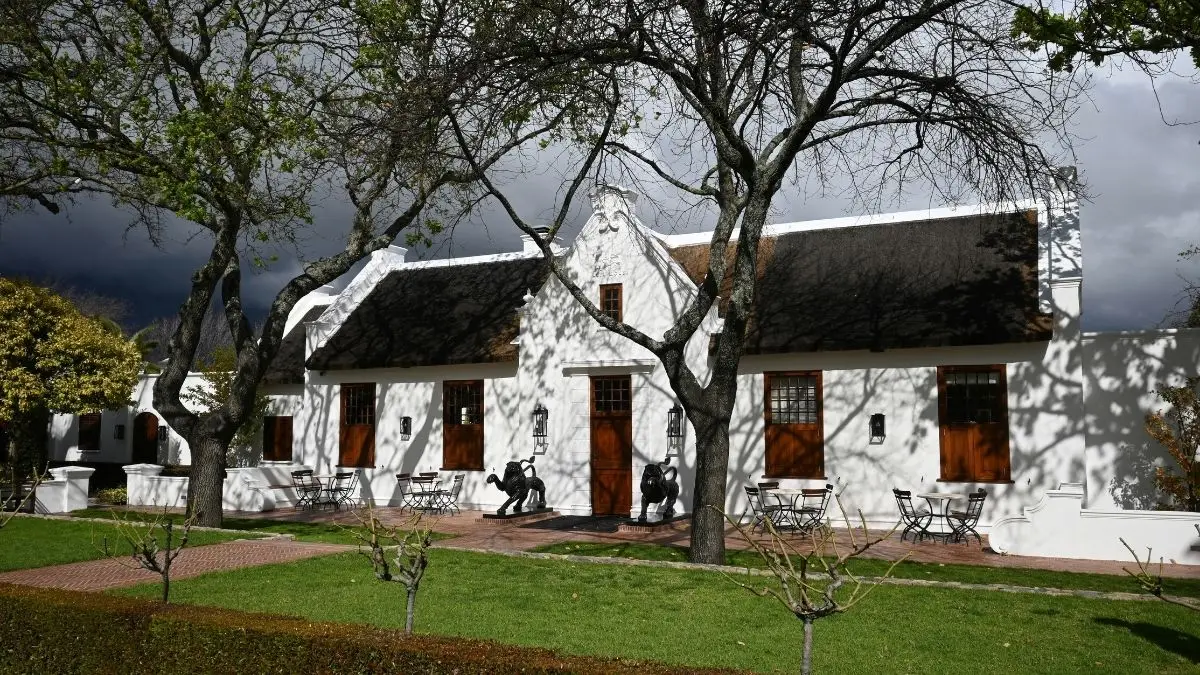
The landscape changes too. Bare vines trace the hillsides in rows, the mountains are sometimes dusted with snow, and the valley fills with a soft morning mist that clears by mid-morning.
Winter pricing is also worth noting. Many properties in Franschhoek offer reduced rates between May and August, including accommodation specials that make a multi-night stay more accessible. If you have been putting off a Winelands trip because of the cost, winter is a good time to revisit that decision.
Wine Tasting in Winter
Red wine is the obvious draw in the cooler months, and Franschhoek’s estates are well set up for fireside tasting experiences. At estates such as Anthonij Rupert, La Motte, and Boschendal, guests can work through a curated selection of Syrahs, Pinotages, and Cabernets while watching rain move across the vineyards — a markedly different experience from a summer tasting under the midday sun.
Winter also tends to mean fewer visitors per tasting session, which gives you more time with the person pouring and a better chance of asking the questions that actually interest you.
For those who want to move between estates rather than settle in one place, the Franschhoek Wine Tram remains operational in winter. We’ve covered the Wine Tram in detail here — but the short version is that it offers a hop-on, hop-off route across seven stops, with a complimentary pour en route. The grey line includes a tractor transfer to vineyards not directly on the tram route, which is a practical option on wet days.
Seasonal Winter Menus
Franschhoek has a strong claim to being South Africa’s food capital, and most restaurants shift to seasonal winter menus between May and August — expect braised meats, root vegetables, and cheese boards that pair well with the valley’s reds.
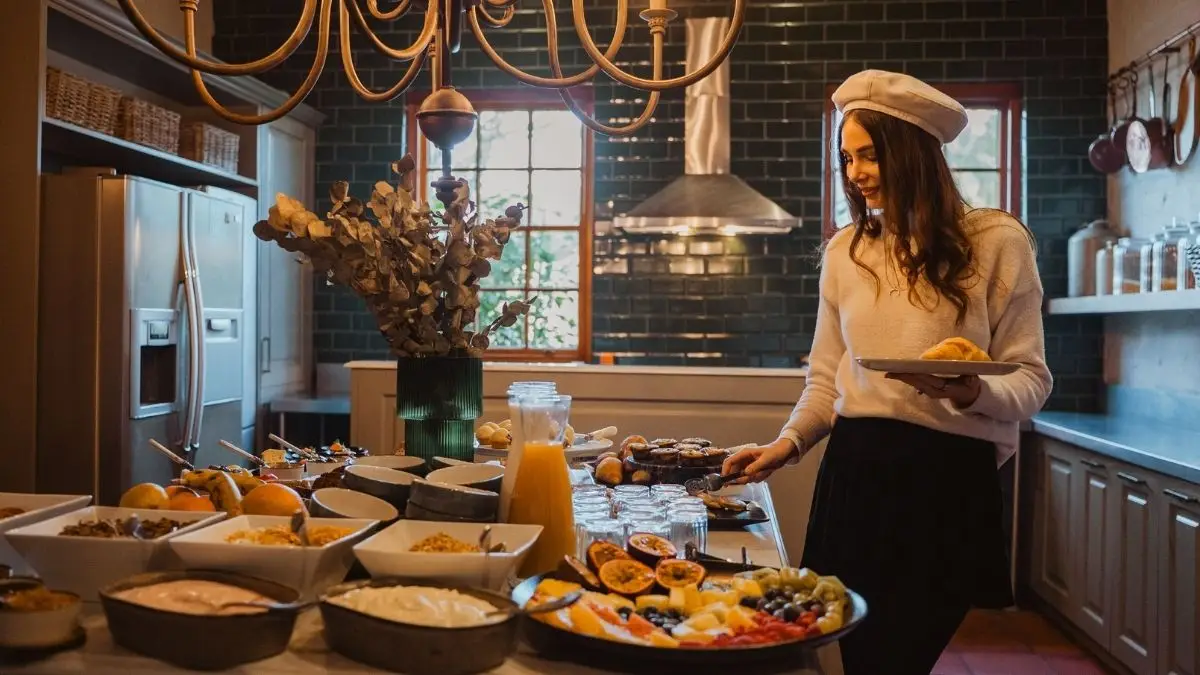
La Motte’s garden café and artisanal bakery is a practical breakfast stop. The indoor-outdoor space has floor-to-ceiling glass, which gives you the feel of being in the garden without the cold. The bread baskets are a reason to arrive early.
Terbodore Coffee Roasters on Huguenot Street is a good starting point for the day. It is a community spot as much as a café — the kind of place where a range of people show up for the same cup of coffee and end up staying longer than they planned. The coffee is excellent.
La Petite Ferme runs a series of winter culinary events, including Chef’s Table evenings at R1,650 per person with wine pairing. Booking ahead is necessary, but it is a well-constructed evening for those who want something more considered than a standard restaurant dinner.
For something family-friendly and hands-on, Huguenot Fine Chocolates offers a demonstration of how their Belgian chocolate is made, with the chance to create your own praline at the end. The cold actually helps — the chocolate sets faster, which means quicker results and happier children.
Things to Do Beyond Wine and Food
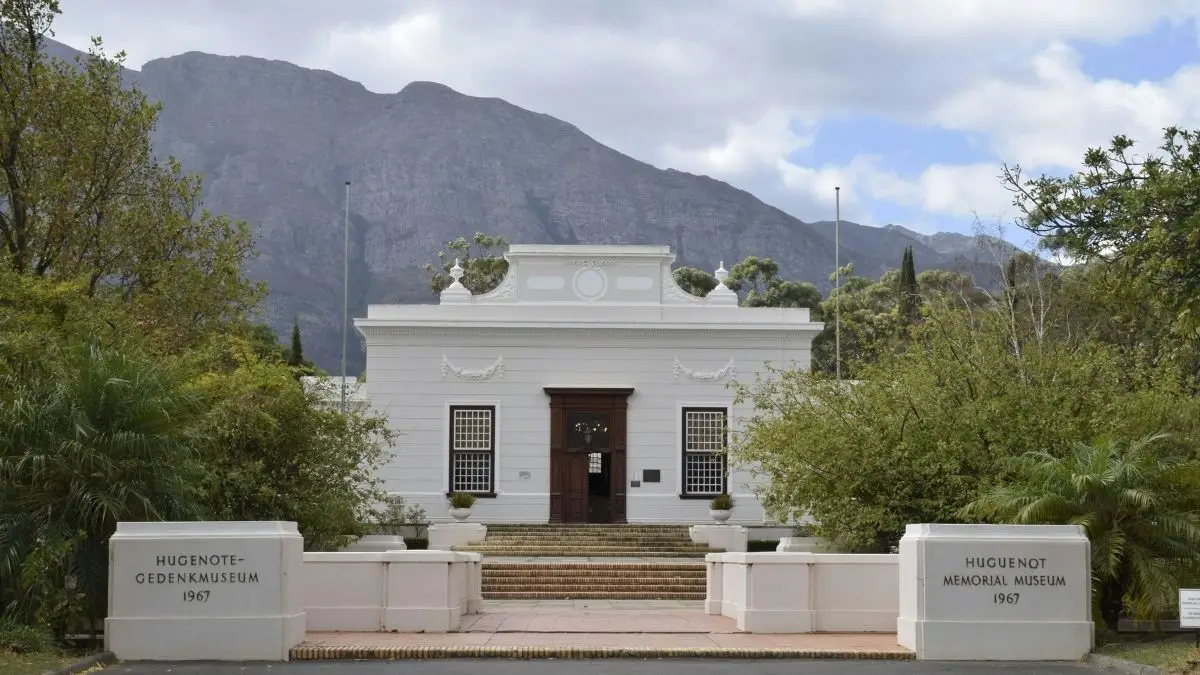
The Huguenot Memorial Museum is a quiet and worthwhile stop. The museum covers Franschhoek’s French Huguenot history — the heritage that shaped the valley’s architecture, its wine culture, and the names of half its estates. Winter is a good time to visit; the pace suits thoughtful engagement with the material.
The Gallery at Grande Provence is one of the more seriously curated contemporary art spaces in the Western Cape. Exhibitions rotate regularly, and the sculpture collection extends through the estate grounds, which you can walk at your own pace. For return visitors, there is usually something new to see.
Café du Vin’s Winemaker for a Day workshop is a two-hour blending session that gives you a working introduction to how different grape varieties combine. It is a different kind of Franschhoek experience — hands-on rather than passive — and it works well for groups or couples who want something to show for their visit.
Franschhoek Bastille Festival runs on 11 and 12 July 2026. This year’s programme includes wine and cheese tastings, live performances from Amy Jones, The Blend Theory, and Absolutely Fabulous, and the return of the Best Dressed Competition.
For a more focused tasting experience, Uncorked Exclusive offers access to standout wines from participating estates in a smaller setting. The Church Street Food Fair walk expands the culinary offering, with local chefs, markets, roaming performers, and themed activities running across the village throughout the weekend. Tickets are available via Webtickets.
Where to Stay: La Fontaine and Avondrood
The Oyster Collection has several properties in Franschhoek. For this winter guide, we’re focusing on two of our boutique hotels: La Fontaine and Avondrood. Both are centrally located, and both currently offer a winter special: book four nights and pay for three, with the cheapest night complimentary. The offer runs from 1 May to 31 August.
La Fontaine Boutique Hotel
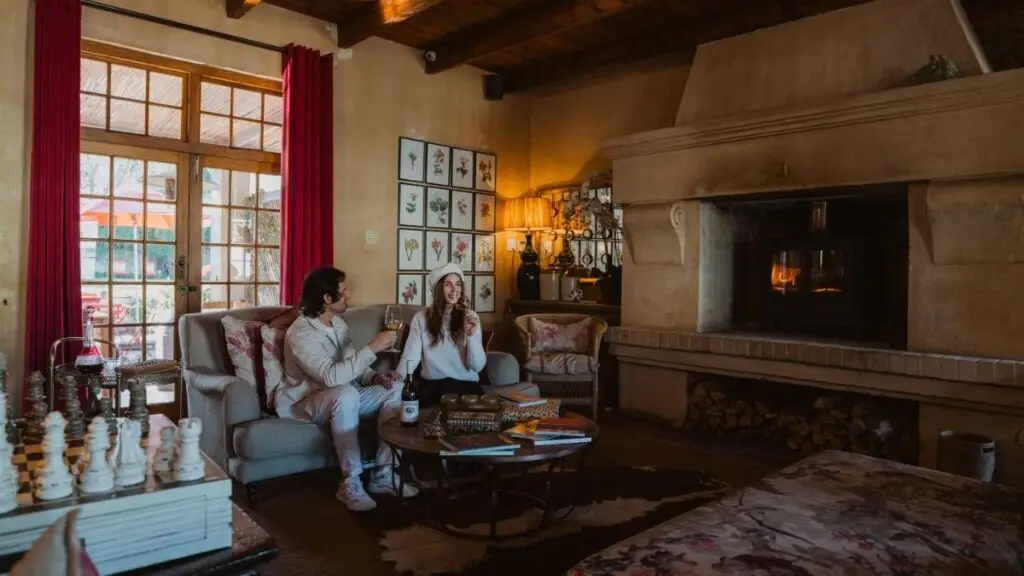
La Fontaine is a four-star boutique hotel with 17 suites spread across two restored heritage properties. The suites are individually designed — some have wood-burning fireplaces, others open onto balconies with mountain views. All include extra-length king-size beds, fine linens, Nespresso machines, minibars, and plush robes.
The hotel has two swimming pools and a wisteria pergola, though in winter the draw is the garden and terraces, which create a calm between outings rather than a destination in themselves. Breakfast is an unhurried affair.
The team at La Fontaine handles the small logistics of a Franschhoek visit well — private tasting arrangements, restaurant recommendations, and the kind of local knowledge that makes a short stay feel more considered. They also offer a honeymoon package with champagne on arrival, rose petal turndown, and gift-wrapped chocolates for guests marking a special occasion.
Avondrood Guest House
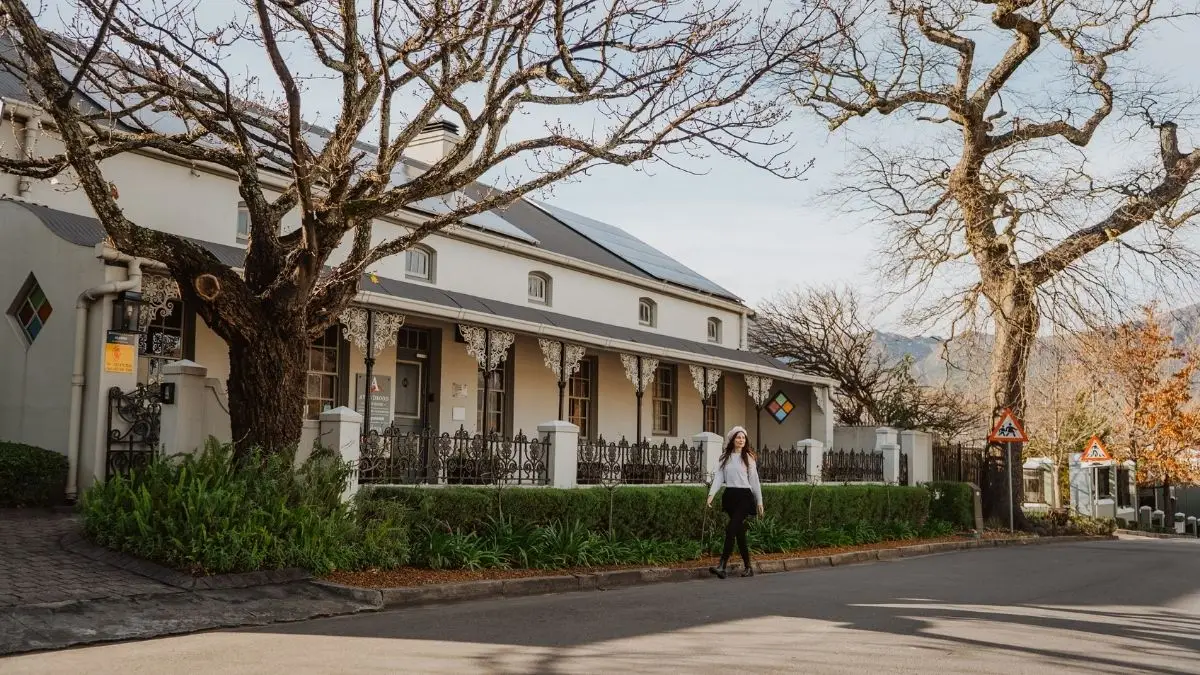
Avondrood is a 1870 Victorian Cape Dutch home that has been carefully renovated to preserve its original architectural character. The French Huguenot heritage of the valley is visible in the building itself — this is one of the older guest properties in Franschhoek, and it shows in the best sense.
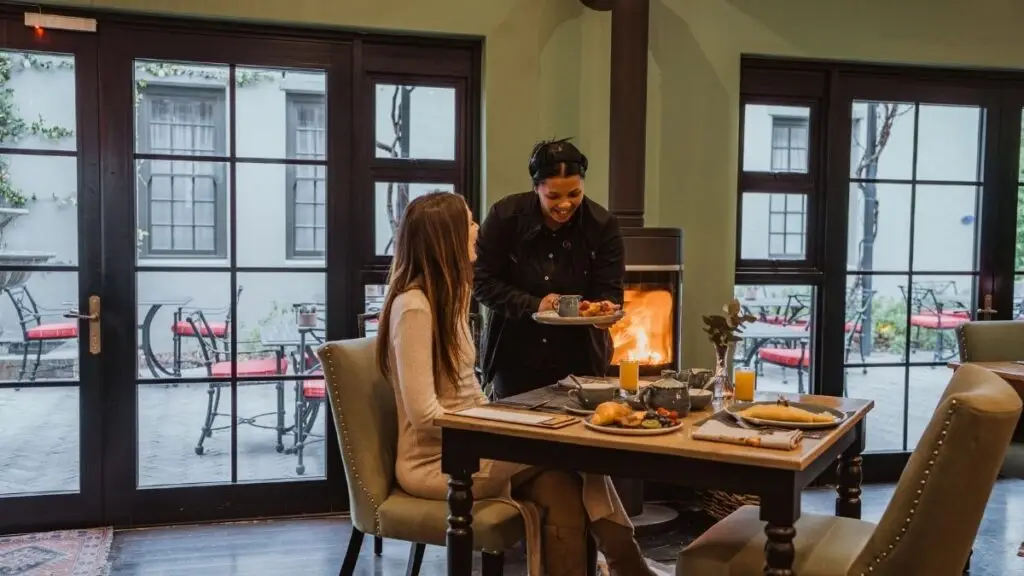
The guesthouse has eight generously sized suites, each styled individually, with 100% percale linen and complimentary bath essentials. Breakfast is served daily — a buffet spread with a full farm-style plate, freshly brewed local coffee, and teas.
Avondrood is family-run, led by Kim, and that shows in how the property operates. It is attentive without being formal, and the service anticipates what you need rather than waiting to be asked.
Both properties are within easy reach of the village centre and the main wine estates — which in winter means you spend your time exploring rather than driving.
Planning Your Visit
When to go: June, July, and August are the core winter months. July offers the Bastille Festival (11–12 July 2026) as an anchor event. June is the quietest month and often the most affordable.
Getting there: Franschhoek is approximately one hour by car from Cape Town. The R45 through Franschhoek Pass is a scenic route if you are coming from Stellenbosch.
What to bring: Layers are more useful than a single heavy coat. The valley can be mild by midday and cold by early evening. A waterproof jacket is worth including — winter rain is intermittent but real.
Booking: The 4-nights-for-3 winter special at La Fontaine and Avondrood is available for stays from 1 May to 31 August. Book directly with The Oyster Collection for the best rates.
Franschhoek in winter is not a compromise on the summer experience. Restaurants are easier to book, wine tastings are less rushed, and the winter special at La Fontaine and Avondrood — four nights for the price of three — makes a longer stay easy to justify.
If that sounds like your version of a good trip, the valley is ready for you.
Frequently Asked Questions
Is Franschhoek Good To Visit In Winter?
Yes. Franschhoek in winter is quieter than the summer season, which makes it easier to book restaurants, enjoy wine tastings, visit galleries, and explore the village at a slower pace. The colder weather also suits the region’s red wines, fireside tastings, and seasonal menus.
What Is The Weather Like In Franschhoek In Winter?
Winter in Franschhoek usually brings cooler days, cold evenings, and a higher chance of rain. The valley is often green after the winter rain, and the surrounding mountains can look dramatic in misty or cloudy weather. Pack layers, a warm jacket, and shoes suited to wet pavements or vineyard paths.
What Are The Best Things To Do In Franschhoek In Winter?
Popular winter activities include wine tasting, long lunches, gallery visits, chocolate tasting, the Franschhoek Wine Tram, the Huguenot Memorial Museum, and seasonal events such as the Franschhoek Bastille Festival in July. Winter is also a good time for indoor tastings and cellar experiences.
Do You Need A Car In Franschhoek?
A car is useful for visiting wine estates outside the village, but it is not always essential once you are staying centrally. Many restaurants, galleries, cafés, and shops are within walking distance from the village centre. For wine tasting days, the Franschhoek Wine Tram, private transfers, or arranged transport are sensible options.
Where Should You Stay In Franschhoek In Winter?
La Fontaine Boutique Hotel and Avondrood are strong choices for a winter stay in Franschhoek. Both are part of The Oyster Collection and place guests close to the village, restaurants, galleries, and wine experiences. They suit travellers who want boutique accommodation with warm, personal service and easy access to the best of the valley.