

The Most Walkable Areas in Cape Town for Luxury Travellers
Most international travellers assume they will need a car to get around Cape Town. In many areas, that’s correct. In others, it isn’t. Where you stay determines how often you rely on transport and whether key parts of the city are within walking distance.
Not all walkable areas in Cape Town offer the same level of access. Some neighbourhoods place you close to the beach, the promenade, cafés, and everyday services. Others are more spread out or residential, where even short distances require transport.
This distinction matters. When amenities are nearby, your day is not structured around transfers or traffic. You can step out, return easily, and head back out again without needing to coordinate a car. That reduces daily logistics and gives you more control over your schedule.
Cape Town is not uniformly walkable. Only a few areas let you access the coastline and amenities directly on foot. Choosing one of these locations reduces the need for transportation and simplifies daily movement.
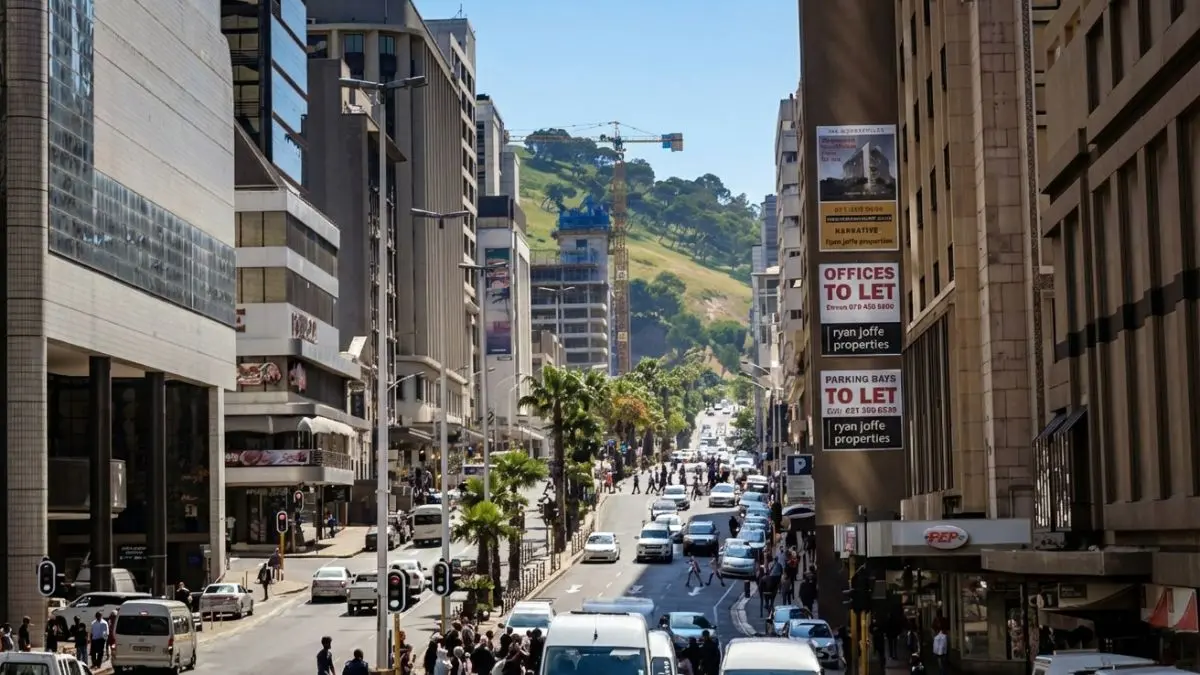
Walkable Areas in Cape Town: What to Know Before You Choose
Cape Town is not a city where you can stay anywhere and expect to move around easily on foot. In many areas, accommodations are separated from beaches, restaurants, and public space. Guests rely on transport to access even basic amenities.
A small number of neighbourhoods offer something different. In these areas, you can leave your accommodation and reach the ocean, cafés, shops, and public spaces within minutes. This changes how you use your time. It allows you to move naturally between your accommodation and the area without coordinating transport throughout the day.
This is particularly relevant for longer stays, where convenience and independence become more important.
Are Walkable Areas in Cape Town Safe?
Yes, the established walkable areas in Cape Town are generally safe for visitors, particularly during the day and early evening. Neighbourhoods such as Sea Point, Camps Bay, the V&A Waterfront, and central parts of the city are active, well-used, and regularly patrolled.
Most incidents involving visitors are opportunistic rather than targeted. As in any major city, awareness matters. Avoid walking while distracted by your phone, keep valuables secure rather than visible, and do not leave items unattended in public places.
At night, it is sensible to use transport for longer distances, even within central areas. Ride-hailing services are widely used and affordable, and most visitors rely on them for evening movement between neighbourhoods.
You do not need to approach Cape Town with alarm, but practical judgement is important. Choosing established neighbourhoods and using transport when appropriate significantly reduces risk.
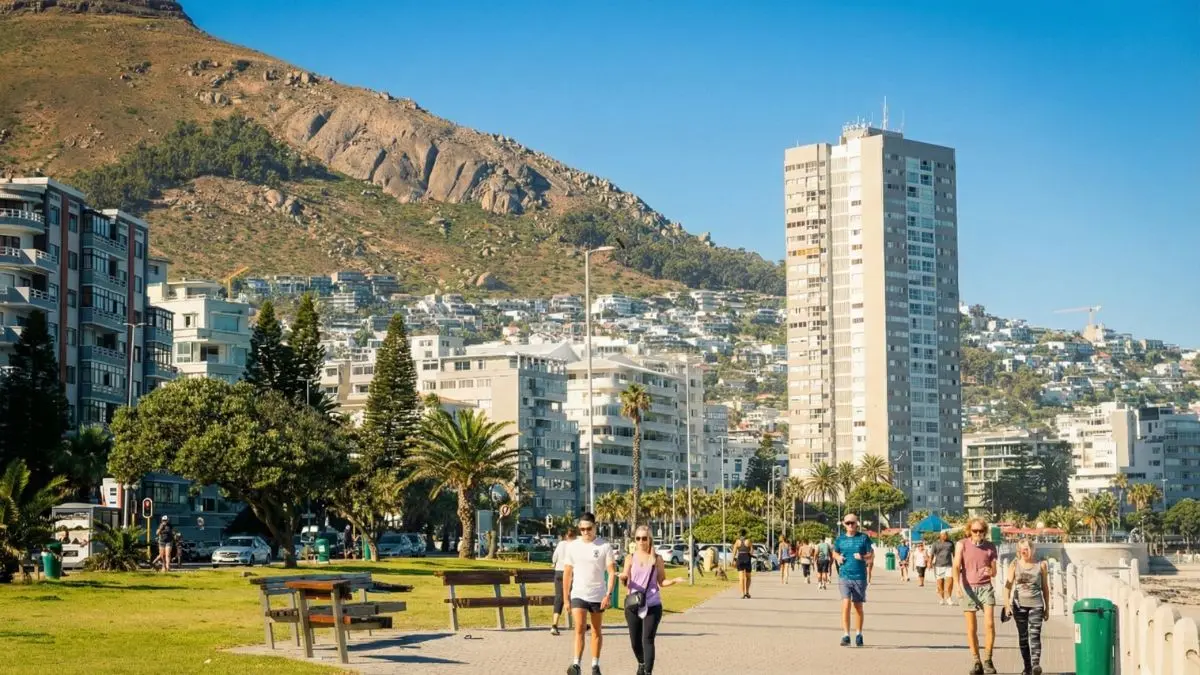
Sea Point: The Most Practical Base For Moving Around On Foot
Sea Point offers the most complete combination of coastal access and everyday infrastructure.
The promenade runs for several kilometres along the Atlantic, and it is one of the most consistently used public spaces in the city. It is not just a narrow path along the water. The city invested significantly in upgrading this stretch, adding landscaped lawns, paved walking routes, public art, and well-maintained lighting.
You will see residents and visitors using it throughout the day. Early mornings bring runners and cyclists. Late afternoons draw walkers and families. In the evening, many people head out for a stroll before or after dinner.
Blackheath Lodge is within walking distance of the Sea Point Promenade and nearby cafés, making it easy to step out and access the coastline without arranging transport.
Behind the promenade, the neighbourhood is dense with cafés, grocery stores, pharmacies, and restaurants. You can leave your accommodation, walk along the ocean, stop for coffee, return, and head out again later without arranging transport.
Sea Point also connects naturally to Bantry Bay and Green Point, extending how far you can move on foot.
For guests staying several nights, this combination of ocean access, public space, and nearby amenities makes daily movement straightforward and flexible.
You are not limited to your accommodation or dependent on transport each time you want to go somewhere.
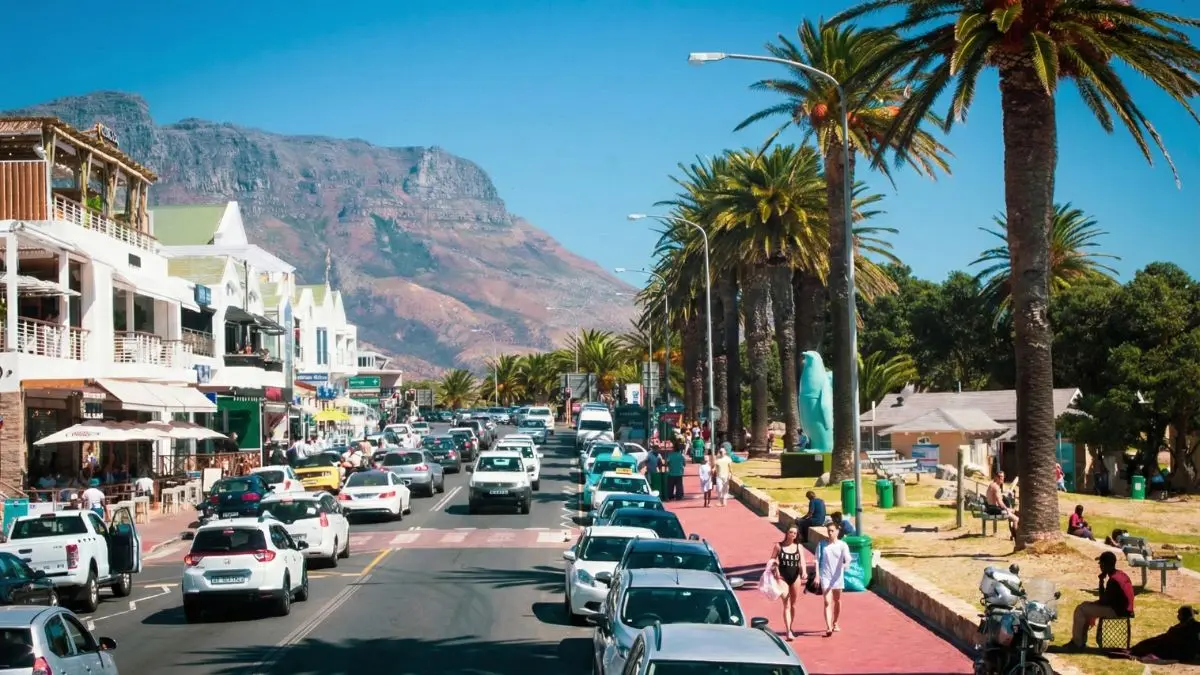
Camps Bay: Direct Access To The Beach And Beachfront Strip
Unlike Sea Point, which stretches along a long promenade with layered infrastructure behind it, Camps Bay is built around a central beachfront strip. The beach, promenade, cafés, and restaurants are concentrated along a defined stretch facing the ocean.
If you stay close to the beachfront, you can step outside and be on the sand within minutes. You can move easily between your accommodation, the beach, and the surrounding cafés without needing transport.
Camps Bay also benefits from structured local management of the beachfront area. The neighbourhood has a dedicated improvement programme funded by local property owners, which supports regular cleaning, monitored public spaces, and a visible security presence along the main strip. CCTV coverage and dedicated law enforcement officers operate within the area.
For visitors, this means the beachfront and surrounding streets are actively managed rather than loosely maintained.
Walkability in Camps Bay depends largely on your accommodation location. Properties along or just above the beachfront allow you to move easily between the beach and nearby cafés. Further up the slopes, distances are short but steep, and most guests use transport to reach the main strip.
POD Camps Bay is positioned a short walk from the beachfront strip, allowing guests to move easily between the hotel, the beach, and surrounding restaurants.
Camps Bay is ideal if your priority is immediate access to the beach and a compact area where key amenities are conveniently located close together.

Cape Town City Centre: Walkable Access To Restaurants, Galleries, And Cultural Sites
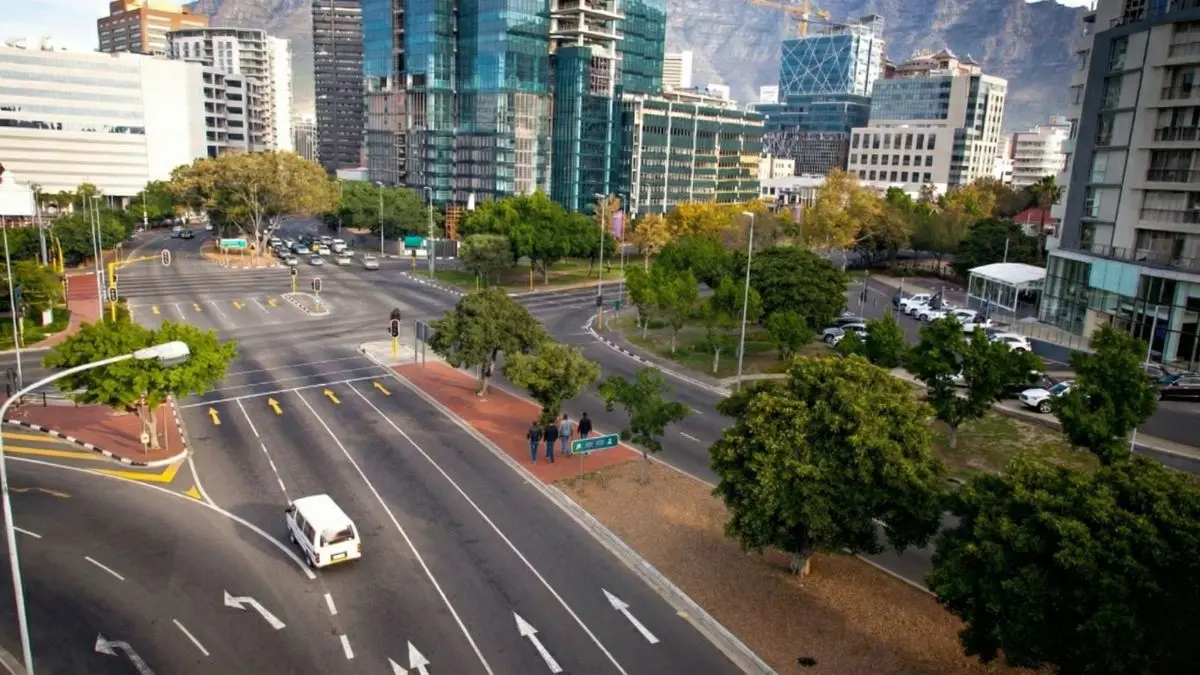
The city centre offers concentrated walkability within a defined grid, particularly around Bree Street, Loop Street, Heritage Square, and Greenmarket Square. Restaurants, galleries, design stores, cafés, and apartment-lined streets sit close together, allowing you to move easily between them on foot.
Bree Street has been named one of the coolest streets in the world by Time Out, ranking among a global list of standout urban streets. Established restaurants, wine bars, and smaller independent spots sit alongside historic buildings and contemporary developments. The character is distinctly urban, with office workers, residents, and visitors sharing the same streets throughout the day and into the evening.
Greenmarket Square is within this network of streets and hosts a long-running daily market selling African curios, textiles, carvings, jewellery, and souvenirs. It is busy and tourist-facing, and part of the City Bowl’s street-level energy. If you choose to buy, take your time and keep valuables secure.
The Company’s Garden provides a clear contrast to the surrounding blocks. Originally established to supply passing ships during the Dutch East India trading era, it is now a large, tree-lined park bordered by the Iziko South African Museum, the National Gallery, and Parliament. It adds open space and cultural depth to the area.
The City Bowl has a true downtown character. Expect bars, restaurants, small food outlets, galleries, retail stores, and high-rise apartment buildings rather than beachfront scenery. It suits visitors who prioritise culture, architecture, and dining over immediate ocean access.
You will need transport to reach the beach, promenade, and coastal neighbourhoods such as Sea Point and Camps Bay. As in any major city, awareness matters, particularly at night and on quieter streets.

De Waterkant: central access, but limited coastal access on foot
De Waterkant lies between the City Bowl and Green Point and is one of Cape Town’s oldest residential pockets. The neighbourhood is known for preserved 18th- and 19th-century cottages, narrow cobbled lanes, and a compact block layout. Many of the buildings have been restored and converted into boutique accommodation, small offices, cafés, and design-led retail spaces.
It’s compact. You leave your accommodation, and within a few minutes, you’re at a café, a wine bar, or a small independent store.
De Waterkant borders Bo-Kaap, one of Cape Town’s most historically significant districts, recognised for its brightly painted houses and Cape Malay heritage. From here, you can walk directly into Bo-Kaap and continue into the City Bowl without needing transport.
Green Point and the V&A Waterfront are nearby. Depending on your exact location, these are either walkable or a short drive away.
What De Waterkant does not provide is direct access to beaches or the coastal promenade. Reaching Sea Point, Camps Bay, or Clifton typically requires transport.
If you want to be close to the city, walk into Bo-Kaap, and still have easy access to surrounding neighbourhoods, this area makes sense. Just don’t expect to walk to the beach.
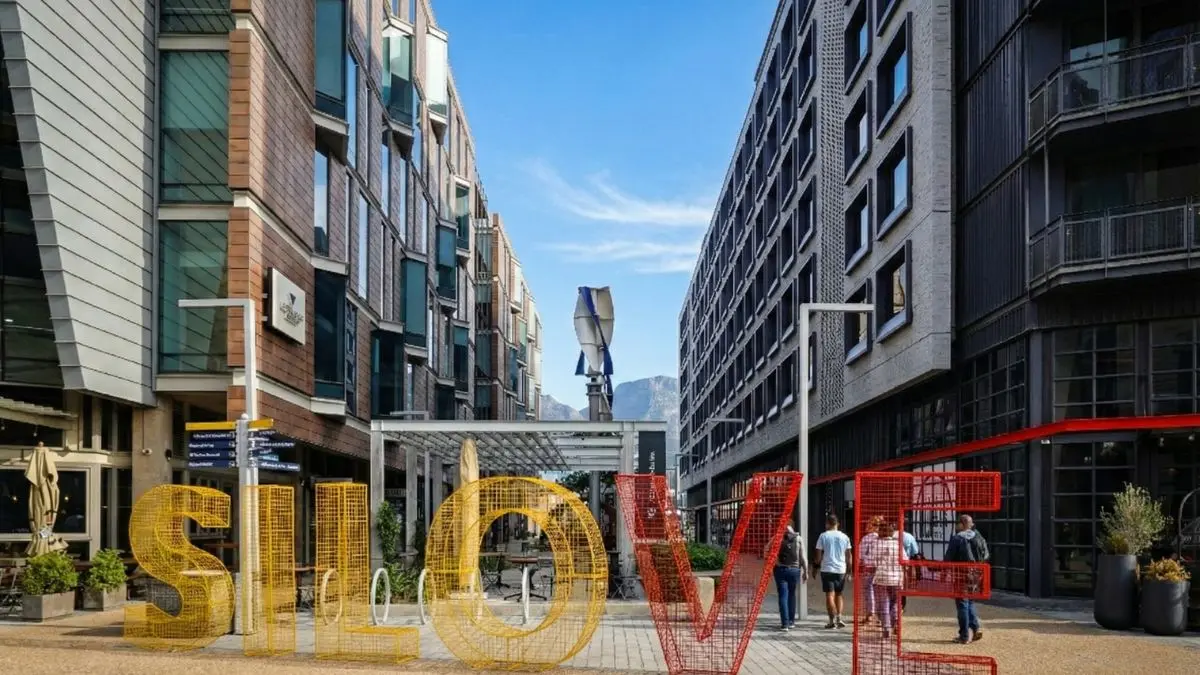
V&A Waterfront: Easy Internal Access, But Separate From Coastal Neighbourhoods
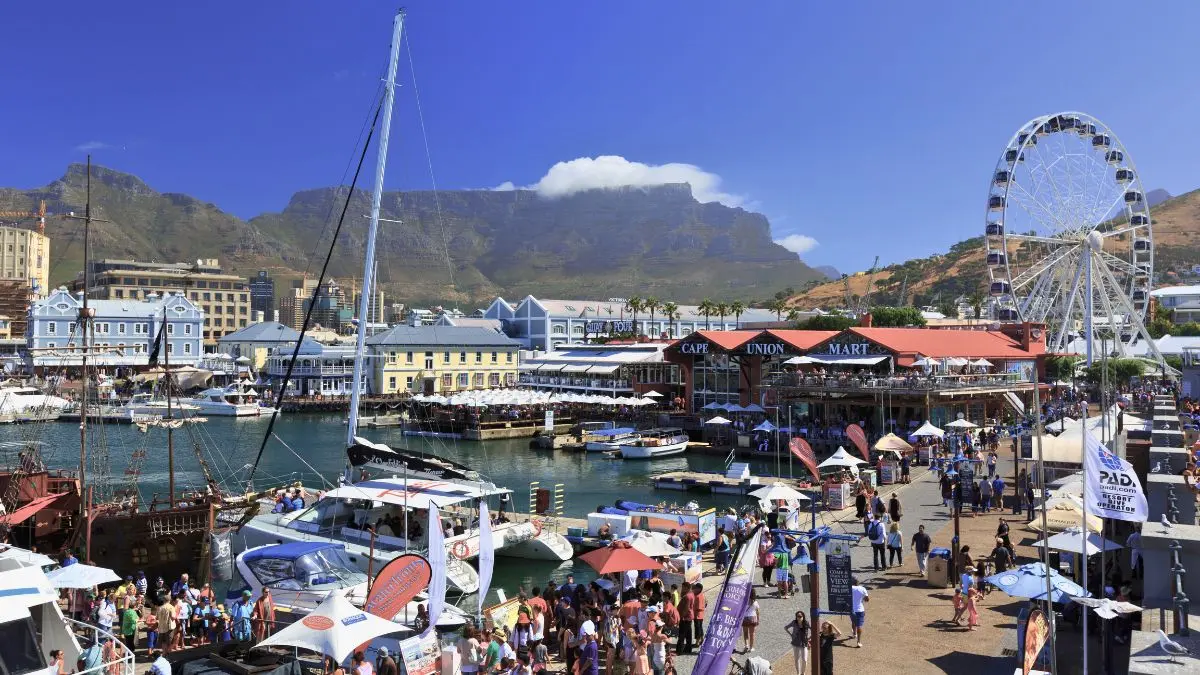
The V&A Waterfront isn’t a typical neighbourhood. It’s a large harbour precinct built around Cape Town’s working port, and it operates as its own contained environment.
If you stay here, you can walk between your hotel, restaurants, shops, and major attractions without ever needing transport. The layout is clear and pedestrian-focused, with everything organised around the marina and harbour.
You’ll find Zeitz MOCAA here, the Two Oceans Aquarium, boat departures to Robben Island, harbour cruises, and a wide range of restaurants and retail in one area. You can spend an entire day moving between museums, shops, and the water’s edge without leaving the precinct.
It’s active throughout the day, with a steady mix of visitors and locals using the public spaces along the harbour. You always have Table Mountain in view, but you are not on the open coastline.
That’s the key distinction. The Waterfront sits on the harbour, not the Atlantic-facing beachfront. There’s no direct beach access, and if you want to walk along the Sea Point Promenade or spend time in Camps Bay, you’ll use transport.
If your priority is having shopping, museums, restaurants, and major attractions within one controlled area, the Waterfront makes sense. If you want the beach and the open coastline outside your door, you’ll be better positioned along the Atlantic Seaboard.
Franschhoek: Walkable Access Within The Village Centre
Franschhoek is approximately one hour from Cape Town and is not a suburb of the city. It is a separate destination, and for many travellers, it becomes one of the trips’ highlights.
The reason to add it is simple. Cape Town offers coastline, beaches, and urban energy. Franschhoek offers vineyards, mountain scenery, and a concentrated village environment where most of your movement happens on foot. The shift in pace is noticeable.
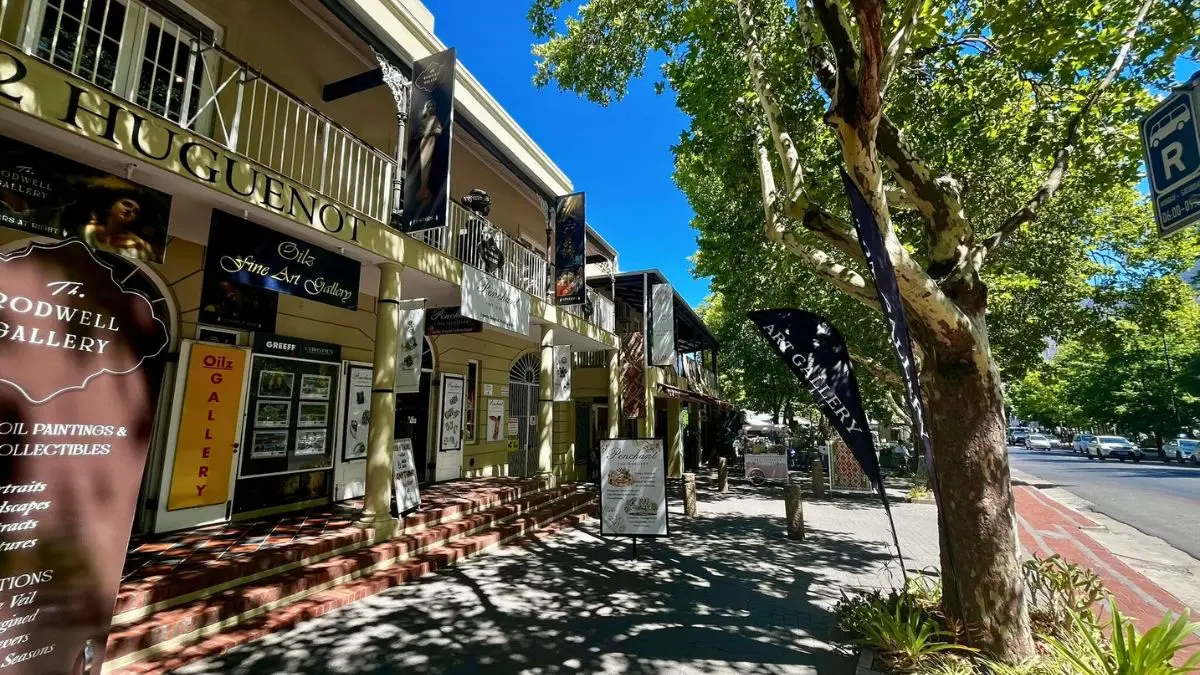
The village itself is compact. If you stay near the main street, you can walk to restaurants, galleries, tasting rooms, and boutiques without needing transport in the evening. That makes it one of the few winelands destinations where you can combine a luxury stay with true walkability.
The Oyster Collection’s properties in Franschhoek —Pink Door Franschhoek, La Fontaine Boutique Hotel, and Avondrood Guest House—are located within walking distance of the village centre, so dinner reservations and tastings are a short walk from your door.
The Franschhoek Wine Tram departs from the village and connects you to estates further out in the valley. You can visit multiple vineyards in a single day without driving.
Many travellers divide their stay between Cape Town and Franschhoek for this reason. One offers ocean access and city life. The other offers wine estates and a slower, village-based setting.
If you want to include the winelands without committing to a rural property that requires constant driving, Franschhoek is a practical alternative.
Why This Decision Affects How You Experience Cape Town
Where you stay affects how often you need a car. In Sea Point and Camps Bay, you can walk to the ocean, the promenade, and nearby cafés without planning transport for every outing.
De Waterkant and the V&A Waterfront also allow you to move around on foot within the area, but you’ll use transport to reach the beach.
Many travellers add Franschhoek to their itinerary. It’s separate from Cape Town, but the village itself is compact, and you can walk to dinner, galleries, and tastings without getting in a car.
Choosing accommodation in a walkable area does not remove the need for transport entirely, but it changes how often you rely on it. When you can walk to the beach in Camps Bay, step onto the promenade in Sea Point, or head out to dinner in Franschhoek village without arranging a car, your stay becomes easier to manage.
The Oyster Collection offers luxury stays in Camps Bay, Sea Point, and Franschhoek, each positioned within walking distance of the areas that matter most. That means you are not isolated from your surroundings. You can step outside and access what you came for.
Transport will always play a role in Cape Town. The key is choosing a base that reduces how often you need it.
FAQs About Walkable Areas in Cape Town
Is Cape Town safe for tourists?
Yes, Cape Town is safe for tourists when you stay in established areas and use common sense. Most visitor-related incidents are opportunistic rather than targeted. Choosing well-known neighbourhoods, staying aware of your surroundings, and using transport at night for longer distances significantly reduces risk.
What is the safest area to stay in Cape Town?
Established areas such as Sea Point, Camps Bay, the V&A Waterfront, and parts of the City Bowl are widely considered among the safest places for visitors. These neighbourhoods are active, well maintained, and regularly used by both residents and travellers.
Is Camps Bay safe to stay in?
Yes. Camps Bay is one of Cape Town’s most established coastal neighbourhoods. The beachfront area is actively managed and regularly patrolled, and it is widely used during the day and evening. As in any city, awareness is important, particularly at night.
Is Sea Point safe for tourists?
Sea Point is considered a safe and popular area for visitors. The promenade is heavily used throughout the day, and the neighbourhood has a strong residential presence alongside tourism. Visitors should still follow standard urban precautions, particularly after dark.
Is the V&A Waterfront safe at night?
The V&A Waterfront is one of the most controlled and monitored areas in Cape Town. It has private security, managed access points, and regular patrols. It is generally considered safe in the evening, though normal awareness still applies.
Is it safe to walk from hotels to restaurants in Cape Town?
In established walkable areas such as Sea Point, Camps Bay, the V&A Waterfront, and central parts of the City Bowl, walking to nearby restaurants is common during the day and early evening. For longer distances or late-night movement, most visitors choose ride-hailing services.
Which neighbourhood is safest for luxury travellers in Cape Town?
Luxury travellers typically choose Sea Point, Camps Bay, the V&A Waterfront, or well-positioned parts of the City Bowl. These areas combine strong infrastructure, visible management, and proximity to amenities.
Is Cape Town safe compared to other major cities?
Cape Town requires the same level of awareness you would apply in other major international cities. It is not a place to approach casually, but nor does it require excessive caution when staying in established areas and using transport appropriately.
Written by The Write Dynamic for The Oyster Collection, combining SEO-informed content strategy with insight and information provided by the Oyster Collection team.